奈良美智「無常人生」- 以藝術改變生命

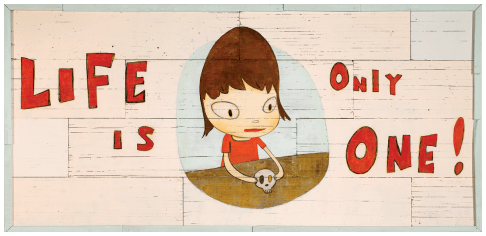
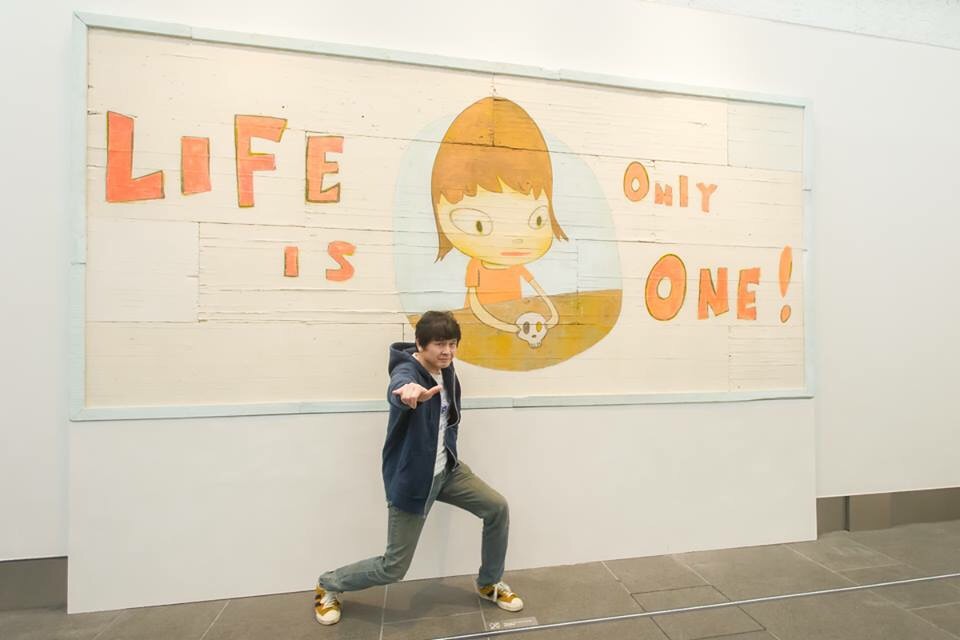
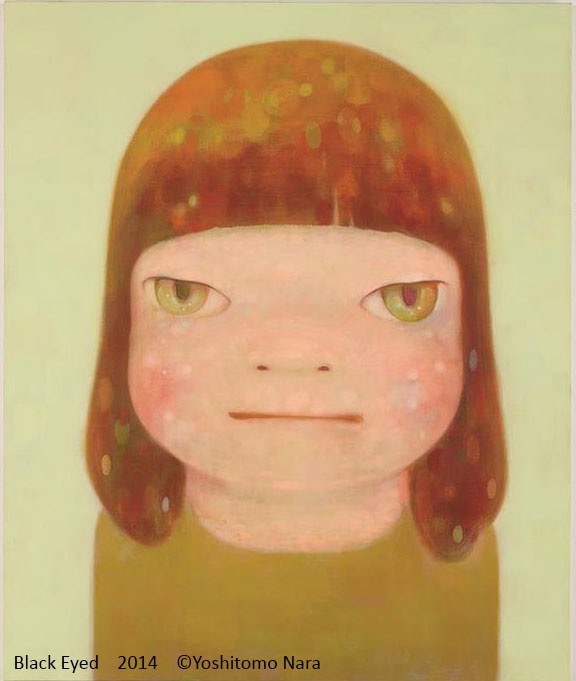
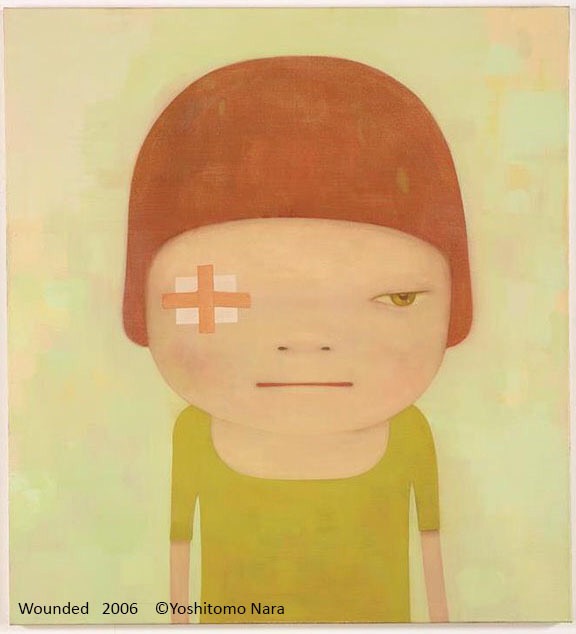
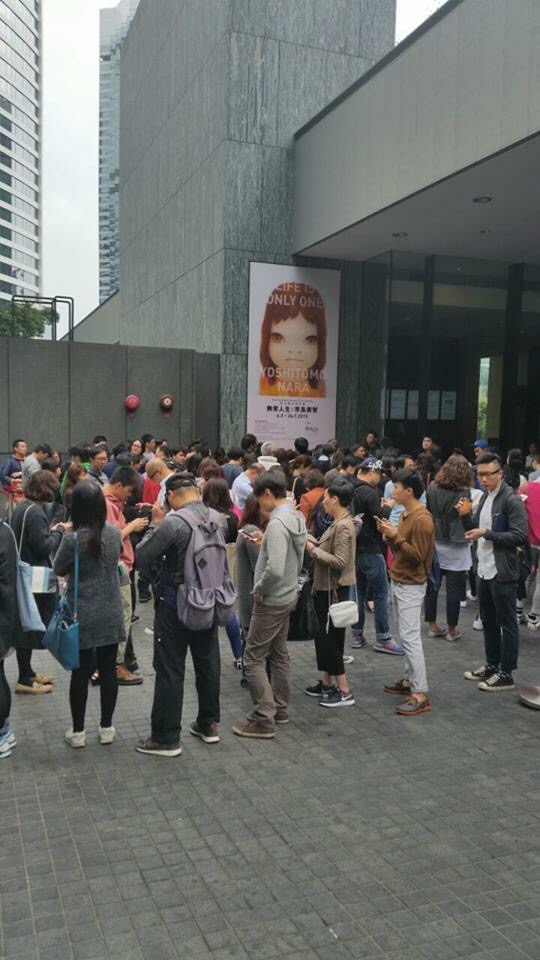
看奈良美智的「無常人生」,是一個很不一樣的觀展經驗,彷彿跟奈良一起走過了一段人生旅程。展覽訴說奈良十多年來心路歷程的變化:由對無常生命的控訴到對無盡生命的期昐,當中經歷災難後的無所適從與重新振作、對過去的追尋,繼而對生命作出正面的反思。作為奈良在日本以外亞洲地區的首個個人展覽,這是一次非常具個性的演出,其真誠的分享很是令人感動!

Photo: The Wall Street Journal


對生命充滿控訴和無奈

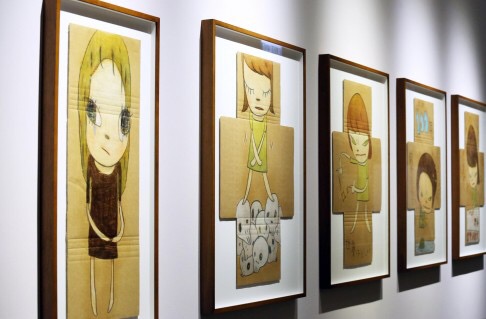
展覽由五個小展區組成:「明日回憶」、「何去何從」、「生命樂章;聆聽今天」、「今昔對話」及「無盡生命」。展出作品包含多種藝術媒介,除油畫、素描、彫塑及裝置外,更有其近年開始涉足的攝影作品。一進場被一幅幅看似卡通漫畫的畫作包圍著,卻沒有半點輕鬆的感覺,反之一陣陣混合控訴、憤怒、哀傷、孤單與無奈的氣氛充滿了整個空間。奈良擅以簡單的筆觸與柔和的色彩表達深沉的思想,既輕且重是其作品的特色。女孩與小狗均是奈良的化身,在各作品中訴説其不同人生階段裡對生命的看法。筆者尤其欣賞奈良隨心即興的風格,紙皮、信封、木板、棉布均是其表達思緒情感的媒介。奈良率性而為、毫不造作,題材生活化,訊息表達直接,亦沒有給自己或觀眾設既定框架,這些都是使其作品普及並具感染力及啟發性的重要元素!

Sounds of Life; Sounds of Today (Photo: South China Morning Post)

Sounds of Life; Sounds of Today (Photo: South China Morning Post)


探索生命無限

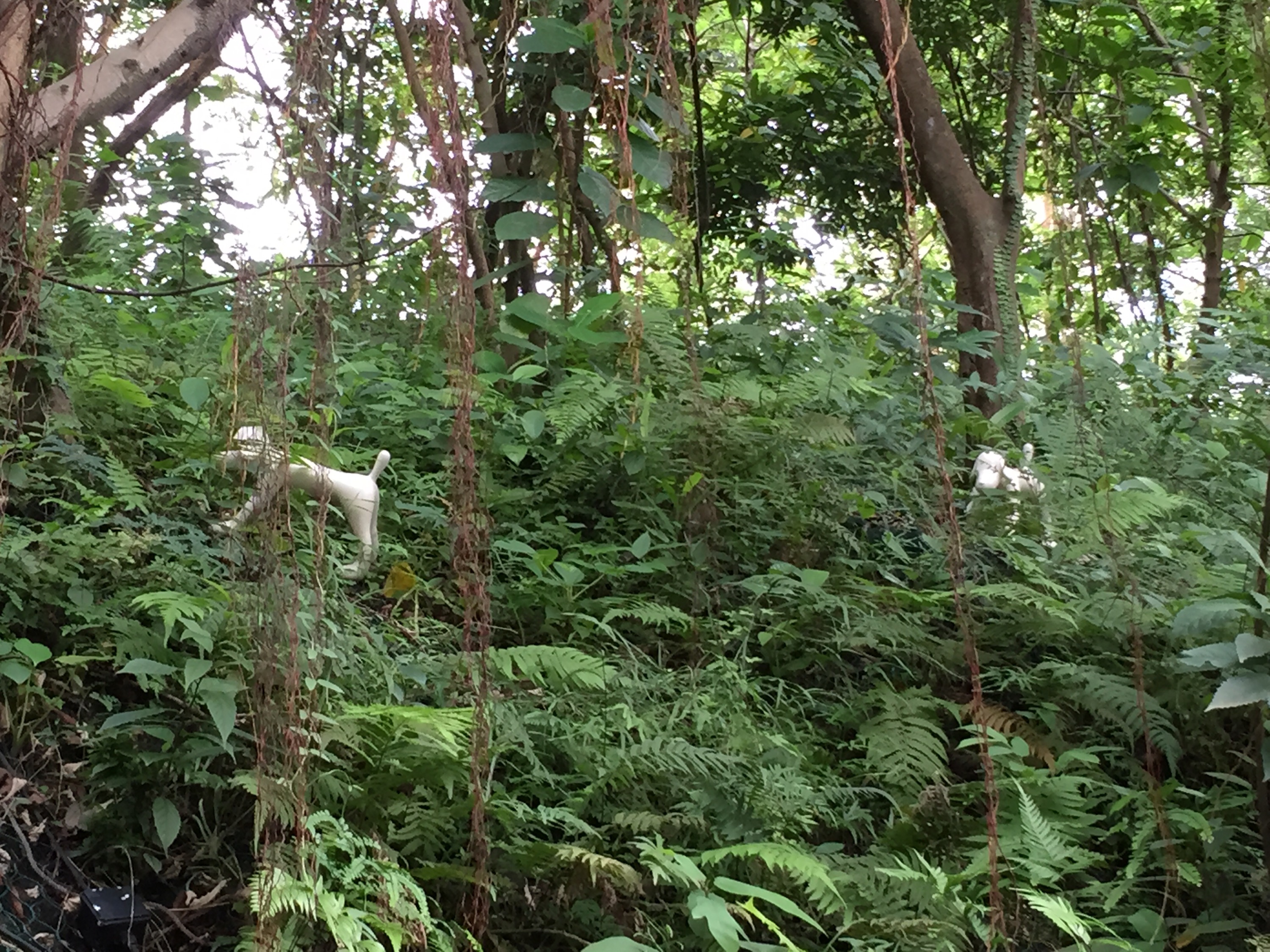
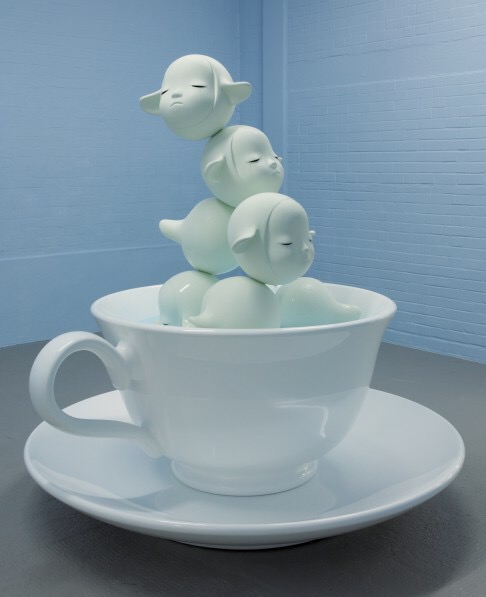
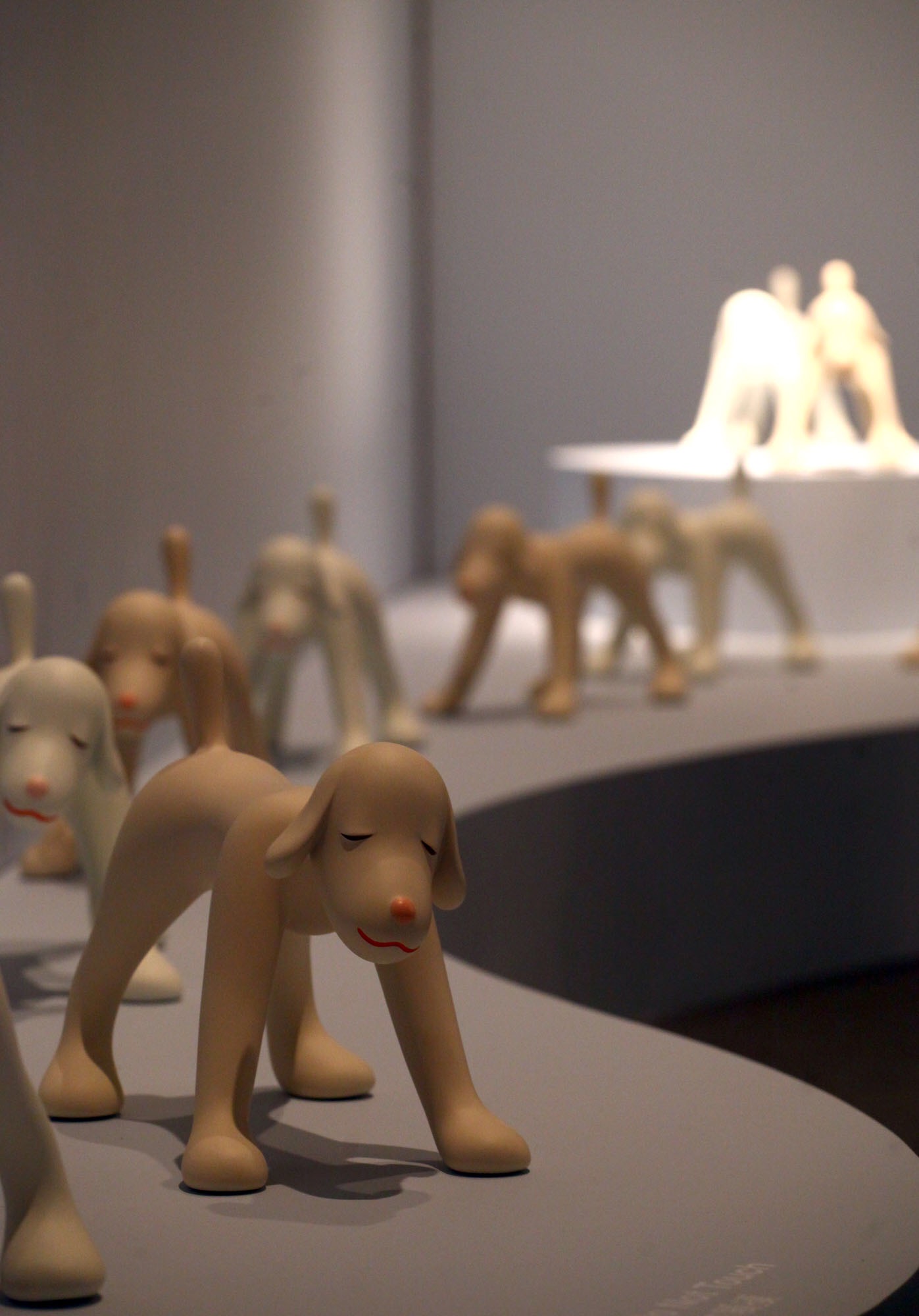
展覽後半部份展出奈良攝影、彫塑及裝置作品。以「今昔對話」為題的攝影作品主要來自其阿富汗及日本以北庫頁島的旅程。拍攝對象以當地小孩、動物、風景及小村落為主,處處流露溫馨、恬靜、愉快的氣氛,令人感覺舒服溫暖。其中庫頁島之旅更是奈良尋找爺爺生活足跡的旅程,作品標緻着「過去」對奈良現在的藝術創作之路有重要的影響。而最後的「無盡生命」部分則在房間中央放置了一枚以玻璃纖維造成,名為Fountain of Life的巨型茶杯裝置,杯中放置了數個叠高了的可愛小孩頭像,他們全部合上眼睛卻有眼淚不斷緩緩落下,形成噴泉。房內四周放置多個奈良著名的小狗造像迷你版,一邊牆上掛了一幅名為「天使」的畫作。作品整體喻意生命儘管脆弱,但在上蒼眷顧下,生命之泉是生生不息的,令人充滿盼望。觀眾在這裏感受到的和諧、正面氣氛與展覽前半部的控訴、卑觀氣氛有着強烈的對比。由無常人生走到無盡生命,奈良是要提醒我們要抱積極的態度去面對無常的人生嗎?

Fountain of Life (Photo: South China Morning Post)

Puppy (Photo: Hong Kong Jockey Club)

隨心創作引發觀眾思考生命

英國哲學家 Alain de Botton 在其著作「Art as Therapy」中分析藝術具有七個功能:回憶、希望、哀傷、重整平衡、了解自我、成長及欣賞。筆者很高興能在奈良此次個展中體驗到以上種種,感受頗深。奈良以其個人經驗及對生命的看法作為藝術創作題材,表達自我之餘,亦引領觀眾思考人生,從而產生共鳴及反思。他的作品並没有給予觀眾既定的答案,好讓觀眾以各自的想像力及個人經歷思考其作品的意義。筆者認為藝術的價值,往往反映在其對社會及個人所發揮的正面影響。奈良的作品在這方面可説是成功的,至少對很多世界各地的奈良美智追隨者而言,他的作品的確能輕易地做到這一點。

(Photo: Facebook of Yoshitomo Nara)

藝術的無窮力量

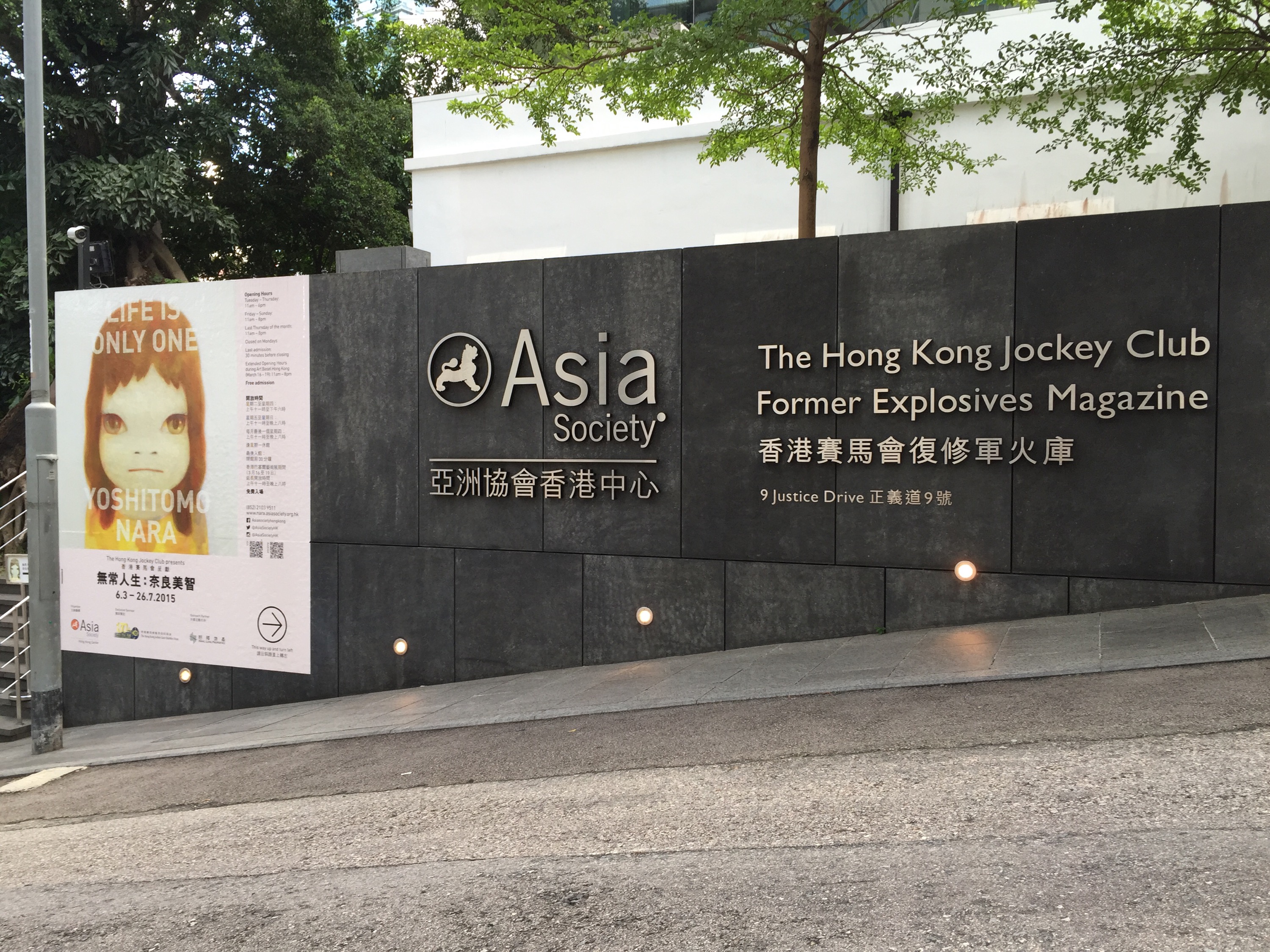
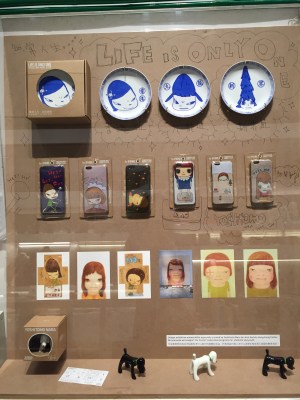
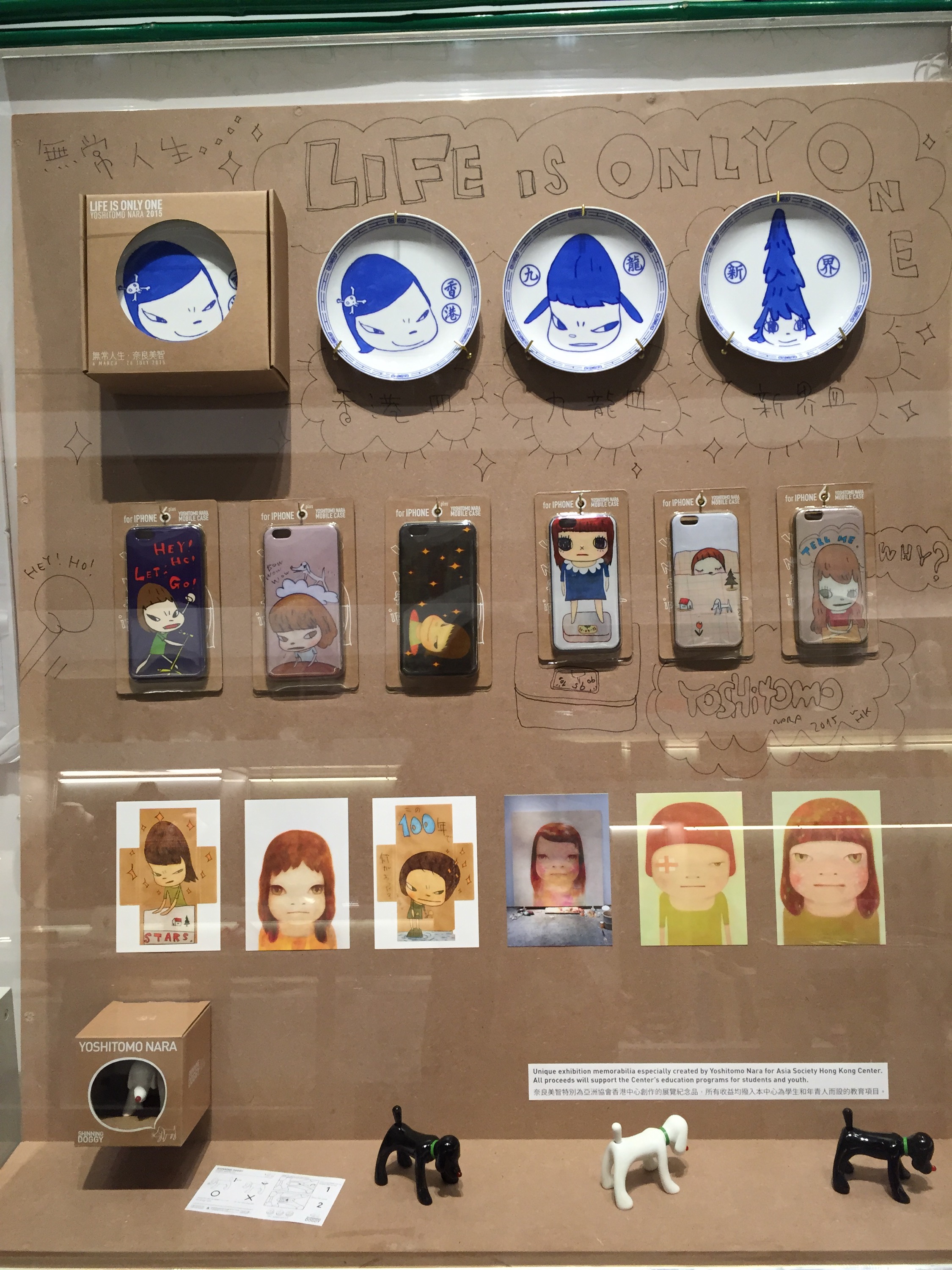
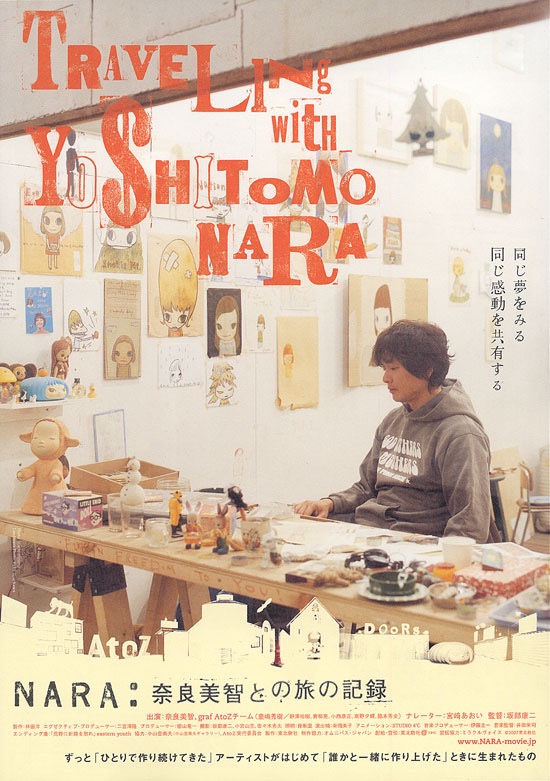
展覽以外,主辦單位亞洲協會還安排了一系列周邊活動包括電影播放、工作坊、座談會、設計比賽、限量紀念品售賣等,讓不同年齡的觀眾能積極參與探索奈良的世界。筆者慶幸欣賞了一套有關奈良的紀錄片「Traveling with Yoshitomo Nara」,影片紀錄了奈良「A to Z 」計劃的發展過程。由奈良與拍檔開始構思,到越來越多人一起參與完成計劃,在奈良的家鄉岩前搭建了一個名為 A to Z 的村莊,村莊內每處皆放置奈良各式各樣的作品,十分別出心裁。影片除紀錄了整個計劃的發展過程外,亦展示了奈良本是一個喜歡單獨創作、不擅交際的藝術家,在推展計劃的過程中,因接觸了一羣熱情投入的工作人員,期間被他們感染、感動而變得開朗活潑。這套影片讓筆者走進奈良的生活,立體地認識展覽作品的創作者是一個怎樣的人,從而加深對其作品的了解。但更重要是它見證了藝術如何積極地影響生命,不僅是藝術家以作品改變觀眾的生命,藝術家同時亦在創作中改變自己的生命。藝術的非凡力量確是令人動容的!

Photo: Asia Society

Photo: asianwiki.com


Interview of Yoshitomo Nara: “I’m still trying to figure out the meaning of life” (Video source from South China Morning Post)


Christine Kan

          53d154554156486e385c7d40_TwitterBlack-Circle-Icon_Email1-940x940download

Japonism

Japonism, Japonism, Japonism…

It is the word to describe my existing mental status.  If not the tsunami at Tōhoku in Japan, I would have already studied in Japan.  The school registration was all ready and suddenly came the outbreak of the crisis.  If I were not given the chance to go to France for the language course, I would have already taken the offer for a Master’s study in Buddhism in Hong Kong.  Life is amazing.  Everything starts from a point and end on the same, like a circle.  Things intermingled and then after going miles’ way you find yourself doing what you should have done at the very first instant.  Today, I start to do my research in Japanese Zen paintings.  Zen, in fact is originated from the Buddhism in China.

But Japonism does not really mean my passion to the culture of Japan.  The term Japonism refers to the late 19th century European craze for Japanese art, fashion and aesthetics.  In art, it refers notably to fans, screens, lacquers, bronzes, silks, porcelains and ukiyo-e woodblock prints – which arrived in huge quantities from Japan, following the decision taken in 1854 by the Tokugawa Shogunate to open up its seaports to international trade with the West.  The ukiyo-e has the advantage of cheap mass-production, making them universally accessible.

“Japonism” exerted a vigorous influence in France (Japonisme in French), especially among painters of the impressionism, by bringing to the artists the new ideas in terms of composition, color, and design.  The European artists made reference to the distinctive Japanese imagery from ukiyo-e and grafted them into their own works.  Examples are the cherry blossoms, lanterns, kimonos, and temples.

Ukiyo-e helped reshaping the techniques and the aesthetic expression of western art.   It typically features prominent outlines (rooted in the Japanese reverence for calligraphy), and areas of flat and vibrant color.  Shadows are generally omitted.  This influence was obvious in the colors and compositions of Édouard Vuillard, Henri de Toulouse-Lautrec and above all Vincent van Gogh.

Hiroshige and Van Gogh

Utagawa Hiroshige (1797 – 1858) was one of the most famous Japanese ukiyo-e artists, considered the last great master of that tradition.  Best known for his landscapes, Hiroshige has greatly influenced French Impressionists such as Monet and Vincent Van Gogh.  For instance, the Flowering Plum Tree (1887) from Japonaiserie of Van Gogh and his Bridge in the rain (1887) were inspired respectively by the works of The Plum Garden in Kameido (1857) and the Sudden Shower Over Shin-Ohashi Bridge and Atake (1857) of Hiroshige.

The Exhibition: Fiber Futures in Paris

At the height of this Japonism, I went to La Maison de la Culture du Japon in Paris and discovered a very interesting exhibition: Fiber Futures.

The works of 30 Japanese artists fascinated my eyes with their metamorphosis of textiles in this exhibition.  The exhibition had already taken place in New York, San Francisco, Helsinki, and Madrid.

Fiber art emerged in the 1960s.  In Japan, it is acting as a framework through which artists are able to re-examine their ancestral traditions through a contemporary angle.  Indeed, the country has a rich history of dyeing and weaving, techniques which are re-appropriated by Japanese contemporary artists nowadays.

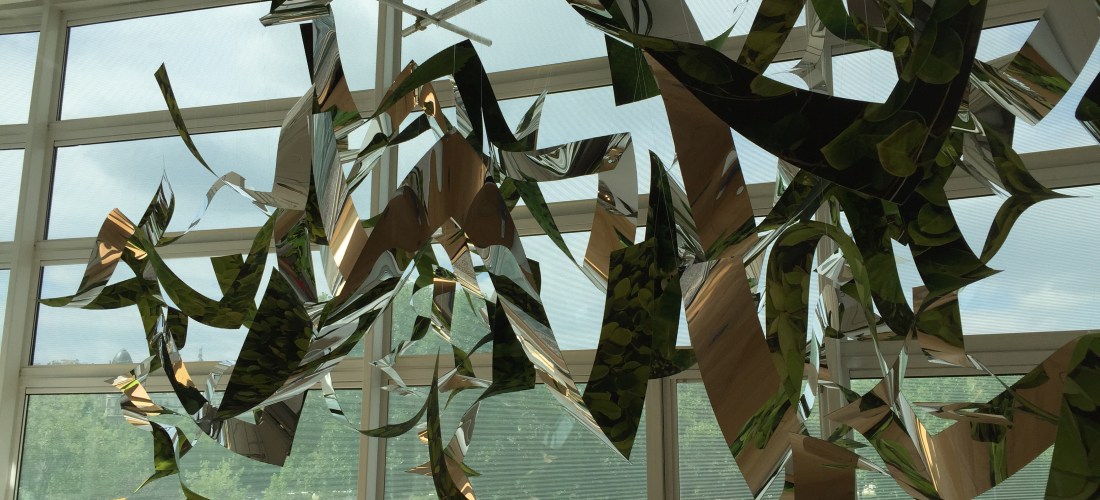
We can find in the exhibition the intermingling of art, craftsmanship, and design.  These contemporary Japanese artists transformed fabrics into sculptures, pictures, emulations of nature by using materials ranging from silk, cotton, recycled cocoons, antique paper scraps, jute, hemp, stainless-steel wire and synthetic fiber.  They transform, bend, divide and reuse the fiber.  The creation of Machiko Agano is one of the most impressive works for me.  The artist presented an artificial forests cut out from mirror card and suspended from the ceiling.  The work infuses in the space with the reflections resulted from the sunshine at the exterior.  The idea of ecology is transmitted through this work.

La Maison de la Culture du Japon at Paris

At the end of the exhibition, we can ask for the posters of the previous, current or coming exhibitions for free.  There is also a small bookstore selling Japanese decorations and books.  This House of Japanese Culture also organize workshops like making and tasting of Japanese noodles – Sobas, sake tasting, Japanese tea history and tasting, etc.  Conferences on cultural topics and courses in Japanese are also available in the House.

(Exhibition of Fiber Futures is open from 6 May to 11 July 2015)


Cindy

image (2)          53d154554156486e385c7d40_TwitterBlack-Circle-Icon_Email1-940x940download

The flood of Céleste Boursier-Mougenot takes over Palais de Tokyo

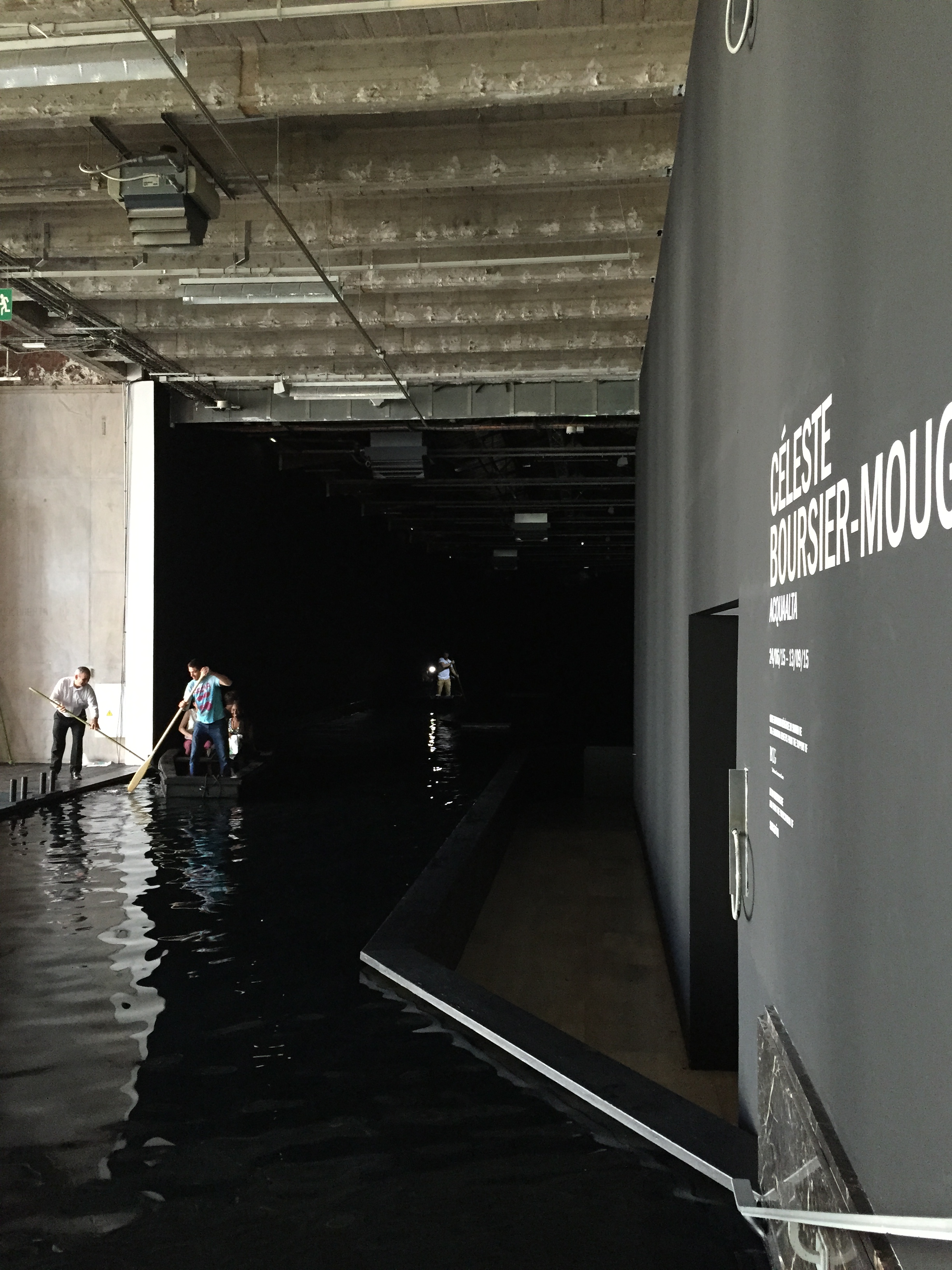
Acquaalta of Céleste Boursier-Mougenot

After waiting for a month, the new summer exhibition at Palais de Tokyo is officially opened to public today.  Being a fan of this “Palais” of contemporary art, I can’t wait but rushing all my way to explore the new stuffs there.

What has bombarded me in the first place is the Acquaalta of Céleste Boursier-Mougenot, which is set at the entrance level of the museum.  Acquaalta refers to the exceptional tide peaks that occur periodically in the northern Adriatic Sea. The peaks reach their maximum in the Venetian Lagoon and cause partial flooding of Venice.  The artist is representing France in carrying out his project rêvolutions at the French Pavilion of the 56th Venice Biennale (9 May – 22 November 2015) in which he transformed the venue into an oneiric and organic island.  I did not get a chance to the Biennale due to the painstaking exams.  It is almost a luxury for me to be able to find the artist’s work Acquaalta here.

The artist creates a lakeside landscape which leads visitors into an experience – tactile, visual and auditory.  Their perception of the space is changed through the journey under the techniques that intermingle music, movement and images.  This journey, in which everyone’s movements take on great importance, takes the audience into an imaginary experience – a journey of their own psyche.  At the end of the journey, we find a zombiedrone, a technique by which the participants’ images are encrypted, leaving only the moving parts to appear on the screen.

The mastering of space, reflection and transformation of images, and the audio effects all work together to give us a new sensory experience.  We may also find this work loaded with poetry in making reference to the myth of Narcissus gazing at his own reflection

Céleste Boursier-Mougenot

Céleste Boursier-Mougenot was born in 1961 in Nice and currently lives and works in Sète. This artist, trained as a musician and composer, has created works by drawing on the rhythms of daily life to produce sound in unexpected ways.  He was the first French prize-winner of the International Studio Program (PS1) in New York, from 1998–99.

Playing around the materiality – Patrick Neu

The summer exhibition is more than just Acquaalta.  Patrick Neu, an artist who works with materials not often found in the art world: bees’wings, lampblack on glass, eggshells, wax, etc., invites us to get into his dialogue with the materials.

His watercolor series Iris put in front of us both the vanity of the blossoming flowers and their fragility.  The period of blossoming of irises never lasts long, at most fifteen days per year.  However, it is already sufficient for Patrick Neu to capture the vanity of this blossom of the flowers.  The artist uses his precise pencil line, outlining the sinuous and delicate flowers on a velvety white paper, followed with a watercolor coating.   Without over-saturated with colors, the natural colors of these flowers together with their vivid forms make them stand out with an unparalleled finesse in a perfectly neutral background.  The artist has carefully chosen the medium to mark his presentation in a natural context – fragile, frameless, simply pinned the delicate painted flowers to the paper.  Under his work, the life cycle and the ephemeral nature of objects give way to a visual poetry.

Patrick Neu was born in 1963, lives and works in Alsace.

More works of the other artists to be explored

Tianzhuo Chen, Jesper Just, Shelly Nadashi, Isabelle Cornaro etc.

(The exhibition is open from 24 June to 13 September 2015 at Palais de Tokyo in Paris)


Cindy

image (2)          53d154554156486e385c7d40_TwitterBlack-Circle-Icon_Email1-940x940download

Revisit Anish Kapoor’s Exhibition at Versailles

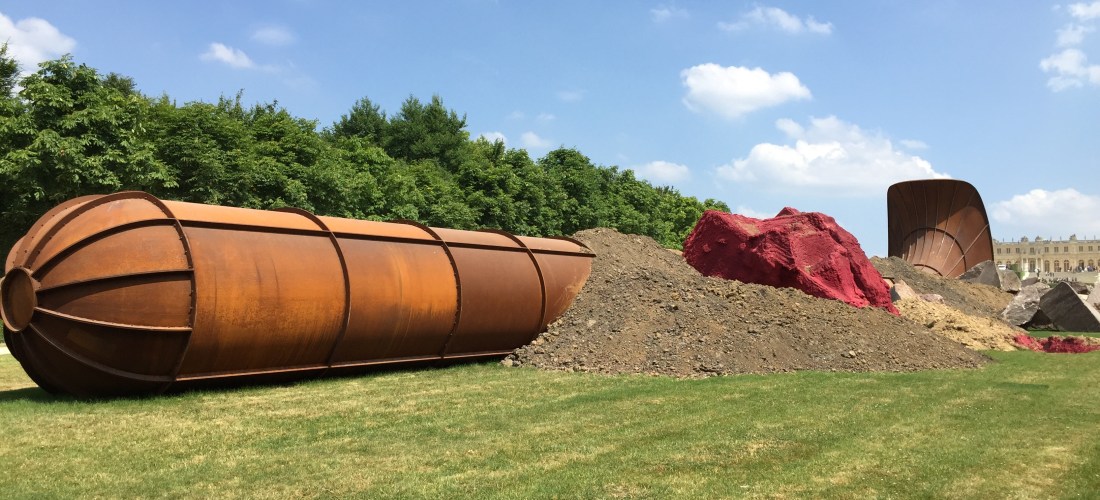
The recent vandalism of Anish Kapoor’s monumental installation at Versailles has become a hot topic in the circle of art people in France.  Focus has been diverted to the intention of the behaviors and the political implication.  The exhibition has barely been open more than a week before the vandals have left their mark on it.   In fact, the victim Dirty Corner, a giant funnel of steel and rock that faces the château, has opened to a swirl of controversy from its very beginning stage of appearance at the château, after the artist has conveyed that the sculpture is meant to resemble “the vagina of the queen coming into power.”

Amongst all the burning debates, my memory rolled back to the week before the vandalism, when I visited the château for the exhibition.  I was looking at the work Sectional Body Preparing for Monastic Singularity in the Star Grove when I saw a mediator patiently explained to a couple the details of the works, their significations, the ideas behind, the representations, etc.  After nearly 20 minutes’ lesson, the couple left with much thankfulness.  “It would have been great if we had seen you right at the start of our visit.  We would have already grabbed a better understanding of the works that we had passed through from the very beginning”, they said to the mediator.  Perhaps people in the debate of this exhibition had a deep understanding of Anish Kapoor’s works, perhaps not.  Above all, it’s time to put the debate aside and start over again to revisit the artist’s works with an eager-learning heart.

One sort of contradiction

The five sculptures placing in the garden, starting from the entrance with C-Curve and Sky Mirror, then Sectional Body Preparing for Monastic Singularity in the Star Grove, Dirty Corner in the centre of the Great Perspective and Descension beyond. The main objective that the artist wants to achieve through his works is to unearth the human condition in all its contradictions.

The first work right when we entered into the château is C-Curve, a mirror running down the sun’s axis.  Anyone who has visited the château must have already fascinated by the famous Galerie des Glaces (Hall of Mirrors), in which a total of 357 mirrors are used in decorating the seventeen mirror-clad arches that reflect the seventeen arcaded windows overlooking the gardens.  But the gardens of the château themselves already embrace the mirror-like quality in their geometry, e.g. the fountains are mirror-like, reflecting the images above and around. The installation of C-Curve is an add-on of all these reflections. What is distinctive is that the C-Curve turns things upside down.  All the similar for the Sky Mirror which brings the sky down to the ground.  These are the representations of “contradiction”.  These installations granted another signification to the viewer: what one see isn’t quite what one think he sees.

Going further to the Dirty Corner-the 70-meter red metal work which resembles a gaping cavern and has been all along in the core discussion of the public and media owing to its signification as the “vagina of the queen”-is in fact dark.  All the same for the work Descension, in which a pool of dark water swirls in a terrifying non-stop spiral motion.  It looks black and bottomless, like a black hole.

The installation of the artist demonstrates one duality: heaven and earth, visible and invisible, inside and outside, shadow and light.  It opens the imagination of the viewers.  The very symmetrical landscape design of Versailles is disrupted by the upside down and distorted images by the mirrors, entering into a state of instability.  Not only the visual images, the auditory and sense of viewers also undergo a certain extent of bombardment.  The grounds around Descension become uncertain and moving, water swirls, the ruin-like Dirty Corner takes over the peaceful tidy green garden, exposed orifices are hidden within the garden’s labyrinths.  All add up to represent a contradiction, as if the world is about to tip over.  Not to mention the Shooting into the Corner at the Royal Tennis Court where a cannon is installed which appeared to have fired large piles of red wax into a corner.   The meant-to-be for leisure tennis court has become a place of violence with the shooting action and the blood-like wax bullets.

A dialogue with history

Other than the idea of  “contradiction”, Anish Kapoor has established a dialogue with the history at Versailles beyond the topography of this territory conquered by Louis XIV.

The French formal garden (jardin à la françasie) has its history back to the 17th century.  André Le Nôtre (1613–1700), once the chief gardener of Louis XIV and the designer of the gardens of Versailles, was the most important figure in the history of the French formal garden.  The gardens he created became the symbols of French grandeur and rationality, setting the style for European gardens until the arrival of the English landscape garden in the 18th century.

The systematic and orderly design of Le Nôtre demonstrated an ideal and perfection.  Nevertheless, we cannot avoid admitting what is underneath the surface of the ground is something darker, more complex, more dangerous.  There is something organic and natural which can be dug up from the earth in an excavation.  The artist wants to show that it is the same for human being, who has all the underlying faults, imperfections and sexuality.  Anish Kapoor leads us to look at the question of eternity and decay through Dirty Corner.   It unrolled a conversation with Louis XIV, who was very controversial in terms of power and sexuality.  Versailles is undoubtedly a place of power.  Through his works, Anish Kapoor initiates a conversation about power in the contemporary society.  As for Descension, the vortex also represents things that are far from neat and tidy, far from perfection.  Descension is like the grumblings and angers rising from the centre of the Earth.  At The Shooting into the Corner, the cannon is positioned in visual parallel to the statue of the early revolutionary hero Jean-Sylvain Bailly, confronting the theme of oppression and the conquest of freedom (Bailly was guillotined in 1793).  Each installation unravels the inherited meanings in the history.  By his installation, Anish Kapoor draws us into this hidden history of Versailles.

Some may consider the exhibition of Anish Kapoor as an act of violence which destructed the aesthetics and classic of Versailles, but how about the act which destructs the freedom of artistic expression?

About Anish Kapoor – some key dates

1959: Born in Bombay, India.

1973: Went to study at Hornsey College of Art and Chelsea School of Art and Design in Britain.

1991 Won the prestigious Turner Prize, awarded annually to a contemporary artist (usually British) less than 50 years old.

2011 Exhibition of his Leviathan as the annual Monumenta for Grand Palais in Paris, and received the same year the Praemium Imperiale, the international art prize awarded by the imperial family of Japan on behalf of the Japan Art Association.

(The exhibition is held from 9th June to 1st November 2015)


Cindy
image (2)          53d154554156486e385c7d40_TwitterBlack-Circle-Icon_Email1-940x940download

L’Exposition du sculpteur JIVKO à l’Orangerie du Jardin du Luxembourg

It is always the “visit by chance” which happened to impress most.

The exhibition of JIVKO at l’Orangerie du Jardin du Luxembourg, Paris is like a breeze in this summer which refreshes our senses.

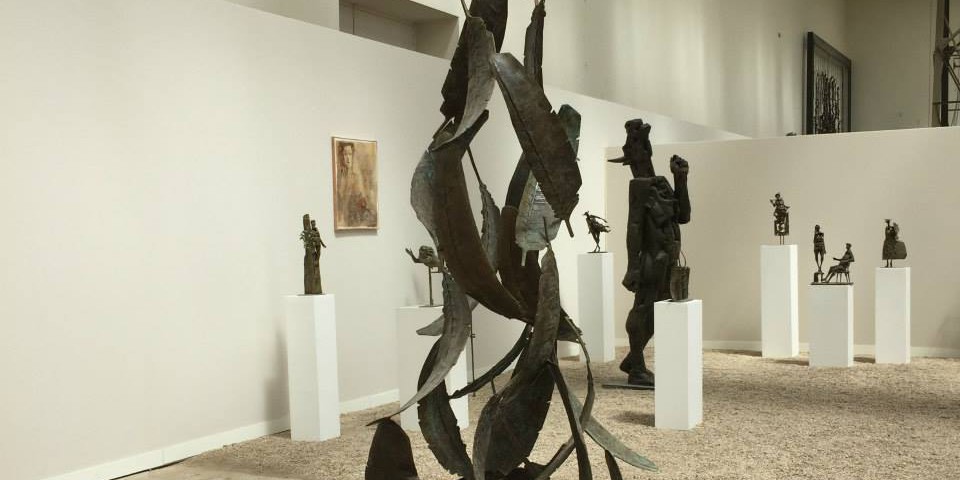
Jivko Jeliazkov is a renowned sculptor whose works are found in prestigious collections all around the world.  Born in Bulgaria, the artist is well-known in France where he has lived and worked since 1990.  The representation of his works is full of life and movement, with themes revolving around man’s evolution and transcendental fate.  With a delicate balance between traditional subjects and contemporary forms,  Jivko’s sculptures stimulate the viewer’s imagination.  He captures wild and primitive energies with his soft and angular geometry.

Embodiment of lightness in the materiality

The amazing thing about Jivko’s sculptures is their sense of lightness.  Instead of the mass of the metal, we find in his works a lace-like sensation.  This apparently mocks the laws of gravity, by contrasting the actual weight of the materials and the apparent lightness of the works.  The forms of the sculptures express a movement and progression, we feel as if they can breathe and move, representing a notion of life and energy.


Between the myth and humanity

Different from Rodin who used to incorporate in his works his aura, Jivko seeks to highlight the soul from the nature and the environment.  He brings the expressive creation of the nature in front of the audiences: the butterflies, the feathers etc.  The compositions of his works usually reveal a mix between the myth and the humanity.

Other than the “lightness” and the “movement” of these bronze sculptures, the paintings of the artist are also impressive.  In the work « Légèreté » (lightness), we feel like the feathers are slowly falling from above.  One may associate this with the opening scene of the film Forrest Gump, in which a feather was falling slowly under the background music.

The exhibition is free.  It’s really worth a visit.

(June 3 – 14, Orangerie du Sénat – Jardin du Luxembourg)


Cindy

image (2)          53d154554156486e385c7d40_TwitterBlack-Circle-Icon_Email1-940x940download


DDR Museum in Berlin – the nostalgia for the East Germany?

In Berlin, the Museumsinsel (Museum Island) is famous and perhaps a must-go for most art and culture lovers.  This is because the five museums gathered around the area have all those Egyptian, late Antique and Byzantine art in them (e.g. the reconstruction of the Ishtar Gate of Babylon).  In fact, the complex is on the UNESCO list of World Heritage Sites.  Their architectural features and historical value are perhaps the other reasons for a visit.  Not far away from this Museum Island, there is another museum named DDR Museum, which is also worth a mention.

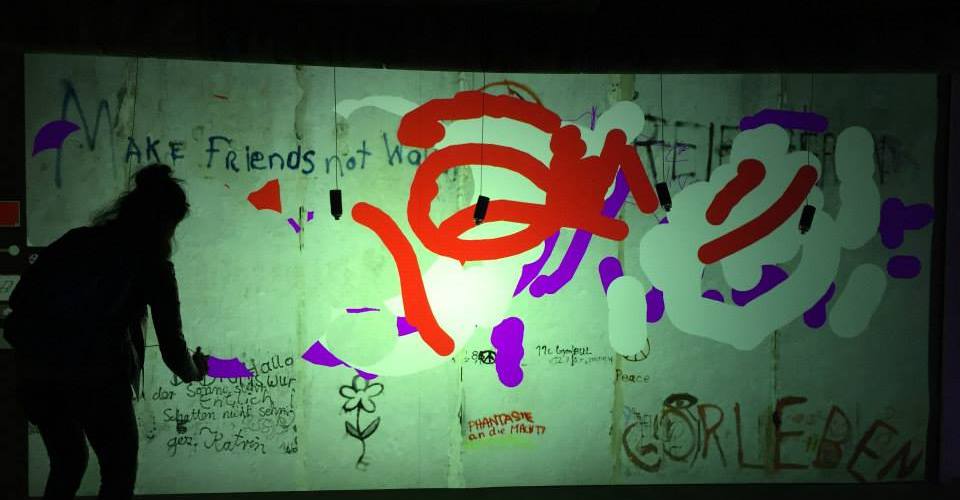
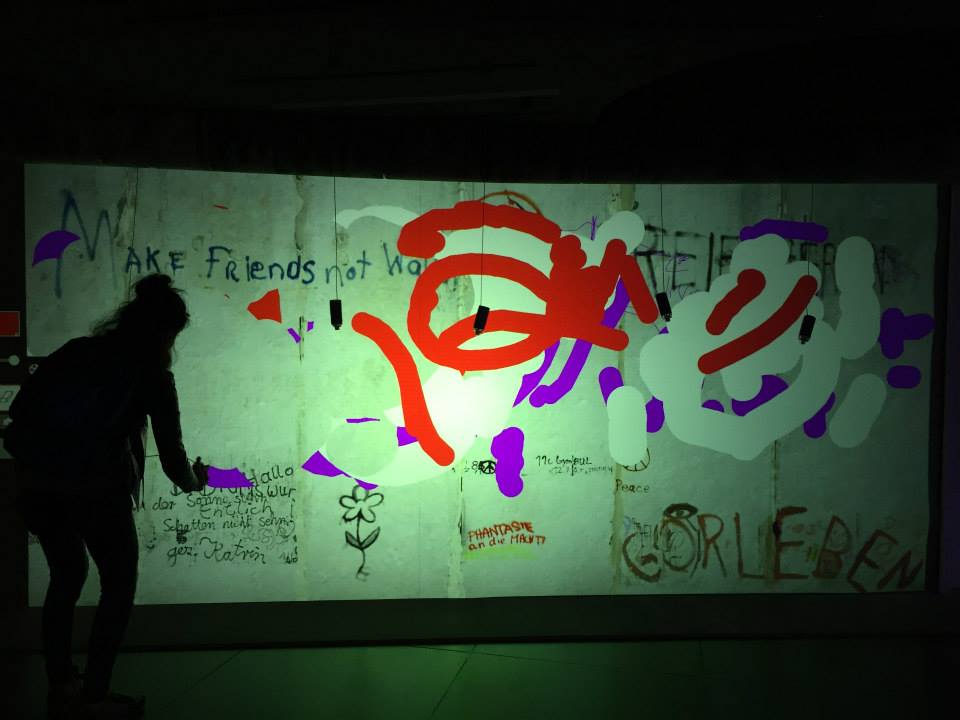
The interactive DDR Museum

The interactive DDR Museum

Located in Berlin Mitte, former East Germany, the DDR Museum is dedicated to what life was like during socialism of the DDR (Deutsche Demokratische Republik in German) or GDR (German Democratic Republic in English).  The museum uses an innovative way to present the everyday life in the former East Germany, a way of life which changed dramatically with the fall of the Berlin Wall more than 25 years ago.

Life in the GDR presented in an interactive way

The museum focuses on everyday life in the GDR instead of the brutality of political events.  It does not dramatize the history.  It just puts right in front of us the real life of the people, be it good or bad.  The display and tools in each part of the museum are interactive.  We are led to take part in the daily life of the GDR, be the participants.  We can experience many fascinating aspects, like sitting in an interrogation room or a prison cell and learning the outrageous techniques employed by the Stasi, the GDR secret police agency.  We can open cupboards, rummage through drawers, drive a Trabi simulator and touch and feel a number of exhibits.

We don’t need to learn the history in the conventional way, we don’t need to see the heavy-hearted presentation of the war and the Berlin wall, and instead we go through the history in lighter way with all these interactive components.

Ostalgie or underplay of the brutality of a dictatorship

For some people in German, The GDR was more than just the dictatorship and the wall.  The east of Germany was also a homeland, a way of life and a culture.  After the fall of the Berlin Wall in 1989 and the German reunification that followed a year later, many of the symbols of the German Democratic Republic were swept away. Almost all GDR brands of products disappeared from the stores and were replaced by Western products.  Some of the Eastern Germans began to miss more or less the aspects of their former lives.  Ostalgie is the word particularly refers to the nostalgia for these aspects of regular daily life and culture in the former GDR.  The DDR museum is thus a platform for these people to recall this memory of the many facets of life.

While some see the exhibition as an important part of coming to terms with the GDR, others feel that it plays down the brutality of a dictatorship.

Despite all these debates, it is doubtless that the design and curating of each corner of the museum are well-thought.

An “Ostalgie” or a “underplay” of history?  It is your call.


Cindy

image (2)          53d154554156486e385c7d40_TwitterBlack-Circle-Icon_Email1-940x940download